
 How you doin’? I guess it’s really starting to get to me, but there is a silver lining. It must be all the sanitizers, but it seems that my body has absorbed so much soap and disinfectant over the last 32+ days that when I pee it cleans the toilet bowl! I'm here all week (month, summer)... tell your friends!
Brittany in Orange County had to remind me that I missed Happy Hour last week. She told me her husband is a whiskey man and has been stock-piling the booze just in case prohibition makes a hasty return. I have designed bar programs for many of our clients that feature Gin or Vodka Martinis and American Whiskey cocktails and all of us at Perspectives are all too familiar with the subject. I know Brittany and her husband are expecting big things, looking for some happy hour Quarantini whiskey cocktails. So, Brit, happy to accommodate you. Cheers! First, a little about American Whiskey… American whiskey is whiskey produced in the United States, of course. The primary types of American whiskey are bourbon whiskey, rye whiskey, rye malt whiskey, malt whiskey, wheat whiskey, and corn whiskey. All of these are made from mashes with at least 51% of their named grains. Then there’s Tennessee Whiskey which must meet very specific quality and production standards. We recommend reading about them while listening to Chris Stapleton’s excellent country ballad. The Doppelgänger Martini After drinking a couple of these Doppelgänger Martinis, you may be seeing double. This one also includes Aquavit, which, by itself is enough to… well, just let’s say, you’ll be singing Hans Christian Andersen songs soon enough! Akvavit or aquavit is a distilled spirit that is principally produced in Denmark and other Scandinavian countries, since the 15th century. It is distilled from grain and potatoes and gets its distinctive flavor from spices and herbs. The dominant flavor must (according to the European Union) come from a distillate of caraway seeds. Ingredients 1.5 oz American Whiskey 0.5 oz Aquavit (preferably Aalborg Gold) 0.75 oz Martini & Rossi Dry Vermouth 0.25 oz Yellow Chartreuse 1 dash Angostura Bitters Lemon Peel garnish Directions
The Manhattan The original Manhattan was invented in New York City in the 1870s. We’ve taken some liberties with this cocktail. This recipe is like an accent from a New Yorker resident—big, loud and bold. You will need a shaker or stirring glass, a bar or long ice teaspoon and a cocktail strainer. Ingredients 2 parts American Whiskey ½-part Martini & Rossi Vermouth 1 dash Angostura Bitters Cubed ice A lemon twist or a maraschino cherry, to garnish Directions
#HappyHour #Cocktails #Whiskey #TennesseWhiskey #ChrisStapleton #Doppelganger #ManhattanCocktail #PerspectivesTheConsultingGroup #QuarantineKitchen #Covid19
0 Comments
How you, doin’? We are learning something new every day about Covid-19 and how it affects us. While many of us have been waiting in lines shopping for brand name sanitizers and disinfectants only to find the shelves are bare, how many of us asked will it work on the current coronavirus? The fact is, if we see a brand name like Clorox, Lysol, or any one of the myriad products from others, we assume that they are safe for sanitizing or disinfecting the Covid-19 virus—it may not be so. This Special Edition post is directed to our food manufacturing and restaurant clients.
I received a white paper from our primary lab, Deibel Laboratories (a trusted source), this morning, What’s the difference between sanitizers and disinfectants? More importantly, do they work against the COVID-19 Virus? This is good information for anyone but especially if you are in senior management or part of a production or quality assurance team. Sanitizers and disinfectants used on inanimate surfaces are regulated by the Environmental Protection Agency (EPA) and are certified to meet certain pre-defined criteria. By law, a chemical product cannot be labeled as a sanitizer or a disinfectant unless, and until, it is EPA certified. In a class of their own, topical antiseptic products including hand sanitizers, wipes and antibacterial soaps, are regulated by the Food and Drug Administration (FDA) because they are used in or on living humans or animals. They are over-the-counter drugs and the active ingredients in these products must be proven to be safe and effective. What’s the Difference Between Sanitizers, Disinfectants and Cleaners? The terms cleaner, sanitizer and disinfectant are often confused.
Time to kill or reduce… The time it takes to kill target organisms, also called the “dwell time” must also be listed on a product’s label. The ongoing COVID-19 outbreak has made it hard to procure sanitizers and disinfectants that were readily available prior to the pandemic. This has especially been the case for hand sanitizers. To help prevent sanitizer shortages, the EPA and FDA are taking actions to ease the production and availability of EPA registered surface disinfectants and sanitizers and FDA regulated hand (topical) sanitizers. EPA requires the source of active ingredients in disinfectants to have EPA approval prior to product manufacture. However, EPA is temporarily allowing registered disinfectant producers to source certain active ingredients from alternative suppliers if they inform EPA and the resulting formulation is chemically similar to the current formulation. The FDA has taken action to increase the supply of hand sanitizers. One new policy allows pharmacists in state-licensed pharmacies or federal facilities to prepare alcohol-based hand sanitizers for consumer and health care personnel without FDA regulatory action for the duration of the public health emergency. Additionally, FDA is temporarily allowing preparation of alcohol-based hand sanitizer products by any firm registered as an over-the-counter drug manufacturer. However, FDA requires the use of a formulation specified by both the FDA and WHO shown below. Formulation 1
Formulation 2
Reference: Reference WHO and FDA. This White Paper was compiled by Ryan Maus and Laurie Post ------------------------------------------- Do you have a question or comment? Do you want to share a favorite recipe or pictures with our readers? Send your thoughts to ed@perspectives-la.com. ------------------------------------------- To you and everyone dear to you, be strong, be positive, stay well, stay safe and be kind. #Disinfectants #Sanitzers #Covid19 #PerspectivesTheConsultingGroup #DeibelLabs 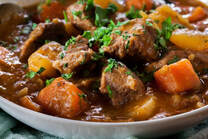 How you doin’? As we enter another month, we hope that you and yours are staying healthy and happy. For obvious reasons, I’ve been featuring many comfort food recipes in this blog series. Some of these foods may not necessarily have been on your “before Covid-19” diet. Many, not all, comfort foods are high in calories and fat, so every few days, try your best jeans on just to make sure they still fit. Pajamas and sweatpants will have you believing all is well around the waistline.
Do you know the first use of the term “comfort food”? It has been traced back to 1966, when the Palm Beach Post used it in a story: "Adults, when under severe emotional stress, turn to what could be called 'comfort food'—foods associated with the security of childhood, like mother's chicken soup." Common sense and Wikipedia tell us that eating energy-dense, high calorie, high fat, salt or sugary foods, such as ice cream, chocolate or French fries, might trigger the reward system in the human brain, which gives a distinctive pleasure or temporary sense of emotional elevation, relaxation and temporary relief. When psychological conditions are present, people often use comfort food to self-treat. Those with negative emotions tend to eat less healthful foods to experience the instant gratification that comes with it, even if only short-lived. Comfort-foods fall into four categories (nostalgic foods, indulgence foods, convenience foods, and physical comfort foods) with a special emphasis on the deliberate selection of particular foods to modify mood or effect, and indications that the medical-therapeutic use of particular foods may ultimately be a matter of mood-alteration, making you feel better. When you’re feeling under the weather, comfort foods seem to take too much energy to accomplish when you're achy and sniffling, so put on your most pathetic sick face, add a line whine to your voice and very nicely ask a family member to make this Instant Pot Beef Stew recipe for you. DISCLAIMER: I’m really not getting paid by Instant Pot (or any other food or equipment company) to post recipes using their products, so I should qualify my posts by saying that there are other makers of similar equipment. Whenever I suggest a manufacturer of any equipment (or an ingredient), it’s because I like it, most likely own it and use it quite often to prove the recipes being posted. Prep time: 5 minutes Cooking time: 55 minutes to 1 hour 5 minutes Yield: 4 servings Ingredients 1 medium yellow onion, diced 2 cloves garlic, minced 2-1/2 pounds boneless beef chuck or boneless short rib meat 1-1/2 teaspoons kosher salt, plus more as needed 1/2 teaspoon freshly ground black pepper, plus more as needed 2 tablespoons vegetable oil, divided 3 medium carrots (about 12 ounces total) 3 medium Yukon Gold potatoes (about 12 ounces total) 1 tablespoon tomato paste 1 teaspoon dried thyme 1/2 cup beef broth 2 tablespoons Worcestershire sauce 1 tablespoon cornstarch 1 tablespoon water 3/4 cup frozen peas Fresh parsley leaves, for garnish (optional) Directions
#BeefStew #Entrees #PerspectivesTheConsultingGroup #QuarantineKitchen #Covid19 #InstantPot #ComfortFoods  How you doin’? I hope you’re cooking up a storm. My friend wrote to me this afternoon saying that he used to go for a run every morning and now he goes for a roll—so much food! So now it’s day 30. We don’t go out much, but when we do, we continue to allow 6-foot distancing, and now we are all wearing masks.
I found this terrific waffle iron on sale at Williams-Sonoma for $129. It is a heavy-duty waffle iron that is able to bake four waffles at the same time. I knew it would be suitable for my aunt’s most famous waffle recipe. “If I knew you were coming, I would have baked some waffles,” was the cry from Aunt Ethel, whose nickname was Aunt Waffle. Aunt Ethel insisted on making her batter the night before to give it plenty of proof and ferment time to develop a wonderful yeasty aroma and flavor. Aunt Ethel’s waffles were the best I ever tasted—crispy on the edges and moist and slightly cakey in the middle. Her waffles were just perfect for soaking up all that real maple syrup (not any of that phony high-fructose stuff). You can stretch your creativity by adding some malt powder, chocolate chips or a handful of toasted pecans to the batter. I even add a 1/4 cup of cocoa powder when I am making dessert waffles. You can top them with most anything—berries, ice cream, yogurt, etc. But all in all, I still like my morning waffles with a large dollop of sweet, softened butter and a touch of berry syrup in addition to the maple. Stay out of trouble—use a very large mixing bowl to make this recipe as the batter will double (or triple) in size as it rises overnight. Prep time: 15 minutes Proof time: 8 hours (or overnight) Bake time: 6 to 8 minutes Yield: 8 Belgian-style waffle squares or 16 standard waffle rounds Ingredients: It is the Night before Waffles and all through the house... 1/2 cup warm water 1 tablespoon active-dry yeast 1/2 cup unsalted butter melted 2-1/2 cups whole or 2% milk (if using 2% milk add two additional tablespoon of melted butter) 1 teaspoon salt (if using salted butter, reduce salt to ½ teaspoon) 2 tablespoons granulated sugar 3 cups all-purpose flour The next morning… 2 large eggs, room temperature, beaten 1/2 teaspoon baking soda 1/2 cup granulated sugar Directions:
The next morning… Rise and Shine!
ChefSecret:
#Waffles #Brunch #Breakfast #Belgian Waffles #PerspectivesTheConsultingGroup #QuarantineKitchen #Covid19 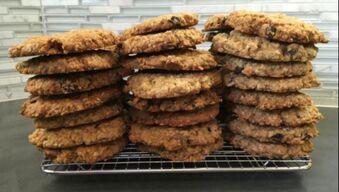 How are you doing? Well, here we are well into week four of social distancing. It is a difficult time for all of us, but we are all in this together and we must remain strong. I can tell you I haven’t missed a meal in four weeks—the Quarantine Kitchen has been working overtime! My refrigerator is well-stocked with the homemade foods that we have been developing just for you. I spend the weekends (and other days too) preparing comfort foods I enjoy, and I hope you like them, too.
I want to thank you for all the positive responses I have received on email and the various social media pages. Yesterday I received over seventy responses. They are most appreciated. For the most part, I’ve tried to make the recipes fairly easy to execute. Okay, the Caramel Pork Belly may have been a stretch—but even that, made in an Instant Pot, was relatively simple. I LOVE cookies! Do you love cookies? Who doesn’t love cookies? When I was a kid, I would always put oatmeal cookies on the top of my cookie list. It wasn’t that I liked them so much better—I liked them fine—I just thought with all that oatmeal they were a little healthier for me… like eating a bowl of hot steamy oatmeal. I mean, could the Quaker Oatmeal Man be wrong? Now I realize with all the creamery butter, two kinds sugars and the added goodies—dried fruit and chocolate chips or chunks—it may not have been quite as virtuous as I imagined. So, let get bakin’! Ed’s Soft Oatmeal Cookies are very moist with a great flavor. Take these cookies up a notch and add a cup of dried fruit (raisins, cherries or blueberries), nuts, chocolate chips or a half cup of each. Prep time: 15 minutes Resting time: 1 hour Bake time: 10 minutes Yield: 2 about dozen cookies Ingredients 1 cup unsalted butter, softened 1 cup granulated sugar 1 cup packed brown sugar 2 large eggs 2 teaspoon pure vanilla extract 2 cups all-purpose flour 1 teaspoon baking soda 1/2 teaspoon salt (note: if using salted butter, reduce this salt to ¼ teaspoon) 2 teaspoons ground cinnamon 3 cups quick cooking oats 1 cup dried raisins, cherries, blueberries, nuts (walnut and pecans) and/or chocolate chips or chunks (optional) Directions
#OatmealCookies #Dessert #PerspectivesTheConsultingGroup #QuarantineKitchen #Covid19 |

For over 4 decades collaboration and vision have been the cornerstones of our approach to developing innovative solutions. We fuel innovation, uncover opportunities, discover trends and embrace sustainability, turning imaginative ideas into profitable realities. Categories
All
Archives
April 2024
|
 RSS Feed
www.perspectives-la.com
Copyright © 2021 Perspectives/The Consulting Group, LLC | Henderson, NV 89052 | 310-477-8877
Copyright © 2021 Perspectives/The Consulting Group, LLC | Henderson, NV 89052 | 310-477-8877