
…from the Perspectives’ Kitchen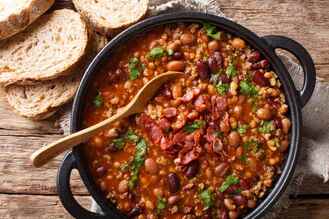 How you doin’? It’s the Big Game weekend, you’ve got a crowd coming over for a watch party and you need a big bowl of something good to serve. How ‘bout a big pot of Texas Cowboy Stew? Not those Cowboys, obviously, though they do know how make perfect all-weather, all-sport entree. Texas Cowboy Stew is a hearty, filling meal you’ll be gobbling down on all winter long.
My classic stew recipe is made extra satisfying with the addition of both ground beef (80/20) and kielbasa sausage and also uses several canned goods for added convenience. It’s spiced with a blend of chili powder, cumin, and black pepper for savory heat. After all, what would a ‘cowboy’ recipe be without a swift kick in the ass? Texas Cowboy stew is a robust, old-fashioned campfire stew. It is traditionally a tomato-based medley of meat, beans and potatoes cooked in a large pot over an open fire. It’s the type of dish that was born out of necessity, but also one that provides ample comfort after a long day of sitting in a saddle or that favorite spot on the couch. Luckily, we live with modern kitchen comforts, so you can swap the campfire for an Instant Pot or a Crock-Pot. Chili and stew recipes are merely suggestions. You have a ratio of meats and vegetables, and you can make it your own using whatever you have on hand. Swap in leeks for onions, fresh or frozen corn for canned or ground turkey for beef. You can even top it with shredded cheese for extra richness. It's quick and easy to make on the stovetop but tastes best when simmered all day in a crockpot or slow cooker. Serve with cornbread and a simple green salad. Prep time: 25 minutes Cook time: 1 hour 15 minutes Yield: 8-10 servings Ingredients 2 pounds ground beef (80/20) 2 pounds kielbasa sausage, sliced into 1/2 inch pieces 1 cup chopped red onion 3 tablespoons chopped garlic 2 cups water 1 16-ounce bottle beer 2 (15.2 ounce) cans whole kernel corn, with liquid 2 (15 ounce) cans pinto beans, with liquid 2 (14.5 ounce) cans peeled and diced tomatoes, drained 1 (10-ounce) can Rotel diced tomatoes, with liquid 4 medium baking potatoes, peeled and diced 2 teaspoons ground cumin 2 teaspoons chili powder 1 tablespoon kosher salt 1 teaspoon ground black pepper 1 tablespoon all-purpose flour flat leaf parsley for garnish Directions
ChefSecret: You can make this dish faster in an Instant Pot or slower in a Crock Pot. Quip of the Day: Q. Why do cowboys always ride horses? A. Because they’re far too heavy to carry! ------------------------------------------- Do you have a question or comment? Send your thoughts to ed@perspectives-la.com. All recipes and cooking tips are posted on our website https://www.perspectives-la.com/covid-19-survival-guide. ------------------------------------------- To you and everyone dear to you, be strong, positive, stay well, stay safe and be kind. Take a breath and count your blessings, and if you have a little extra to share with others, please consider donating to Feeding America, Tunnel to Towers, Union Rescue Mission and/or American Red Cross. #Entree #TexasCowboyStew #BigGameChili #Beef #Sausage #Beer #Dinner #2024Recipes #URM #T2T #FeedingAmerica #RedCross #PerspectivesTheConsultingGroup ©PERSPECTIVES/The Consulting Group, LLC, 2024
0 Comments
…from the Perspectives’ Kitchen 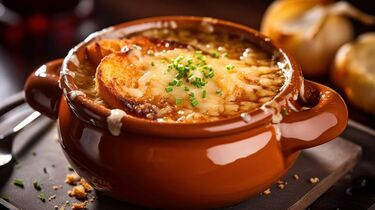 How you doin’? French onion soup is such a classic dish that most folks tend to reserve it for restaurant outings—I do. It’s a must have at Hanks Fine Steaks and Martini’s at the Green Valley Casino in Henderson, Nevada. But if you think about it, this rich, savory soup made from buttery caramelized sweet onions, dry white wine, sherry and savory cooked beef broth is perfect for cozy winter nights. It is one of the ultimate comfort foods.
This is a one dish soup as the crusty French bread is built right in. Simply float a lightly toasted baguette slice over the soup, then top with nutty Gruyère cheese. To finish it off, place it under a broiler until the bread is golden brown and crispy, the cheese is melted and bubbly and beginning to brown. The soup essentially becomes a brothy dip for your cheese toast. I always make a little extra cheese toast for slurping up any remaining soup in the bottom of the bowl. French onion soup’s depth of flavor lies in the caramelizing of the onions, which if done right, is a bit time consuming—45 minutes. Stir the onions occasionally to make the onions nice and golden. It’s really quite simple… it’s just a bit of stirring, simmering and ladling. Real basic stuff! I know you can do it. You’re not just sweating the onions; you are caramelizing them turning the sugars to a golden buttery brown. French onion soup is a light lunch or dinner and great for a first course for entertaining. It’s the perfect starter for a Hank’s steak dinner. Plus, you can cook the soup ahead of time, and then slide everything under the broiler right before serving. That way the Gruyère is still bubbling when the bowls come to the table. Prep time: 25 minutes Cook time: 1 hour Yield: 4 to 6 servings Ingredients 3 tablespoons unsalted butter 3 pounds large sweet yellow onions, peeled and thinly sliced 3/4 teaspoons kosher salt, divided, plus more to taste 6 cups beef stock (homemade or store bought) 1 cup dry white wine 2 teaspoons dry sherry 1 tablespoon all-purpose flour 1/2 teaspoon freshly ground black pepper, plus more to taste 1 baguette, cut into 1/2-inch slices 1-1/2 cups grated Gruyère cheese 1 tablespoon chopped chives for garnish Directions
ChefSecret: Use chives only—do not use the large spring green onions—they are not as sweet and flavorful as chives. Quip of the Day: An apple a day keeps the doctors away... an onion a day keeps everyone away. ------------------------------------------- Do you have a question or comment? Do you want to share a favorite recipe or pictures with our readers? Send your thoughts to ed@perspectives-la.com. All recipes and cooking tips are posted on our website https://www.perspectives-la.com/covid-19-survival-guide. ------------------------------------------- To you and everyone dear to you, be strong, positive, stay well, stay safe and be kind. Take a breath and count your blessings, and if you have a little extra to share with others, please consider donating to Feeding America, Tunnel to Towers, Union Rescue Mission and/or American Red Cross. #Soup #FrenchOnionSoup #HanksFineSteaks #CaramelizedOnions #YellowOnions #FrenchBread #2024 #T2T #URM #FeedingAmerica #RedCross #PerspectivesTheConsultingGroup ©PERSPECTIVES/The Consulting Group, LLC, 2024 …from the Perspectives’ Kitchen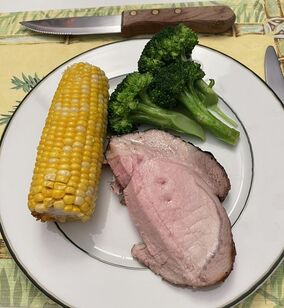 How you doin’? My Pork Loin Rib Roast is the perfect dinner for company or holidays when Prime Ribs of Beef are not so affordable, and you don’t have to slave in the kitchen to serve something special. Here’s everything you need to know to make it perfectly every time so it’s juicy and delicious.
A Pork Loin Rib Roast is a pork loin with the ribs still attached. Another way of thinking about it is similar to rack of lamb or prime rib. If you slice the roast into chops, you’d have 8 or 9 pork rib chops. Unlike a rack of lamb, one pork chop is plenty for one person, so that single pork rack will feed a crowd. You probably won’t find a pork rib roast at the supermarket unless you make arrangements ahead of time. So, call your butcher and order one and ask them to French it for you. “Frenching” means trimming the extra meat between the ribs. It’s not imperative, but it makes for a nice presentation. You can do it yourself, but why bother when the butcher will happily do it for you? Since a pork rib roast is basically a pork loin roast with ribs, I use the same cooking method as I would for roast pork loin. Since it’s a little more sophisticated, I give it a little extra flavor by seasoning it with a dried herb blend. Use whatever kind you like—Italian herb blend, Herbes de Provence (a French herb blend), or make your own. Because there is so much flavor in this cut of pork it doesn’t take much. Ingredients Pork loin rib roast, 3 – 5 pounds 1 teaspoon black pepper 1 teaspoon garlic powder 1/2 teaspoon kosher salt 1/4 cup balsamic vinegar Equipment You’ll need an oven-safe rack to set the roast on while it cooks. Don’t have one? Three or four ribs of celery will work. The idea is to allow the hot air in the oven to circulate under the roast. You’ll also need a roasting pan, large enough to hold the roast and some aluminum foil. Directions
ChefSecret: Some people like their pork really well cooked because it used to be recommended that pork be cooked to 160⁰ F. People got used to pork like that and continue to prefer it very white and drier, versus slightly pink and moist. If that’s you and you need your pork more well done, then go with a final temperature of 160⁰ F. That will be 20-25 minutes per pound for a 3-5 pound roast, and 11-15 minutes per pound for an 8-10 pound roast. You’ll take the roast out when it is at 150⁰ F and then let it rest, and then do the final high heat in the recipe. The resulting temperature will be 160⁰ F. If you prefer it juicy and very slightly pink at the center, then go with 145⁰ F. For a 3-5 lb. roast, this will be 18-23 minutes per pound , whereas for an 8-10 pound roast it will be 8-11 minutes per pound. You’ll take the roast out when it reaches 135⁰ F and then let it rest, and then do the final high heat cook. The final temperature will be 145⁰ F. These are the correct times and temperatures according to the National Pork Board. Finally, crank up the oven really high (475⁰ F) and give the roast a last blast in there for 10 minutes. That extra heat really browns and crisps up the outside of the roast, for extra flavor and texture, while not penetrating into the roast to take away the juiciness created earlier. Then carve it immediately and serve. No need to rest it again because the inside of the roast already had its resting time. That results in a juicy pork loin (which is often hard to accomplish) while still having a nice crust. Quip of the Day: Q. Why is working at a Pork Sausage factory the worst job? A. Because every day is Ground Hog Day. ------------------------------------------- Do you have a question or comment? Send your thoughts to ed@perspectives-la.com. All recipes and cooking tips are posted on our website https://www.perspectives-la.com/covid-19-survival-guide. ------------------------------------------- To you and everyone dear to you, be strong, positive, stay well, stay safe and be kind. Take a breath and count your blessings, and if you have a little extra to share with others, please consider donating to Feeding America, Tunnel to Towers, Union Rescue Mission and/or American Red Cross. #Entree #PorkLoinRibRoast #Pork #PrimeRib #Dinner #2024Recipes #URM #T2T #FeedingAmerica #RedCross #PerspectivesTheConsultingGroup ©PERSPECTIVES/The Consulting Group, LLC, 2024 …from the Perspectives’ Kitchen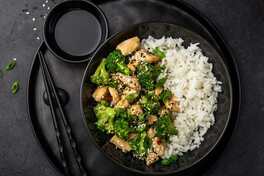 How you doin’? I love to vacation in Thailand. I usually spend a couple of days in Bangkok at the Oriental Hotel and then go off to one of the islands down south. The last time I went I changed up the routine and went up to Chiang Mai where the elephant sanctuaries are located. Aside from these magnificent animals, I found the following recipe for Thai Peanut Chicken with Broccoli at Mandarin Oriental Dhara Dhevi Resort.
My version of the Thai Peanut Chicken Dish with Broccoli is to cook it in a spicy sauce. If you like it milder, use less cayenne; if you like it spicier, use more. If you're salt conscious, use low-sodium soy sauce or fish sauce. Prep time: 25 minutes Cook time: 20 minutes Yield: 8 servings Ingredients For the rice 4 cups cold water 1 tablespoon chicken base (I prefer Better Than Bouillon) 2 cups uncooked Jasmine rice For the sauce 8 tablespoons low sodium soy sauce 4 tablespoons creamy peanut butter 4 tablespoons coconut milk 4 teaspoons rice vinegar 1 teaspoon ground cayenne pepper For the chicken 4 tablespoons peanut oil 4 skinless, boneless chicken thighs, cut into thin strips 4 tablespoons chopped garlic 1-1/2 tablespoons chopped fresh ginger 2 -1/2 cups broccoli florets 3/4 cup chopped green onion, green tops only 1/3 cup chopped roasted peanuts 1/2 cup whole roasted peanuts for garnish 2 limes, quartered, for garnish Directions To make the rice 1. Combine the water, chicken base and rice in a saucepan over medium-high heat; bring to a boil. 2. Reduce the heat to low, cover and simmer until rice is tender and liquid is absorbed; about 20 minutes. To make the sauce 3. Meanwhile, stir together the soy sauce, peanut butter, coconut milk, rice vinegar and cayenne pepper in a small bowl; set aside. To make the chicken 4. Heat the peanut oil in a skillet or wok over high heat. 5. Stir-fry the chicken, garlic and ginger in hot oil until chicken is lightly browned; about 5 minutes. 6. Meanwhile, steam the broccoli in a microwave oven until tender; about 2 minutes. 7. Reduce the heat on the chicken to medium and add the green onion tops, peanuts and soy sauce mixture. 8. Continue to cook, tossing frequently. 9. Add the precooked broccoli; cook until it is tender and the chicken is cooked through; about 5 more minutes. 10. Serve the cooked chicken and broccoli over cooked rice. 11. Garnish with a few whole peanuts over the top and on the edges of the plate and a 1/4 cut lime. ChefSecret: I use dark meat (chicken thighs) for most of my Asian dishes that call for chicken. I find that dark meat results in a moister product. If you’re hung up on white meat, use 4 half breasts for this recipe. You can also top with 3 tablespoons of toasted shredded coconut. Quip of the Day: Did you hear about the Thai chef who became a superhero? He had the power to pad Thai! ------------------------------------------- Do you have a question or comment? Send your thoughts to ed@perspectives-la.com. All recipes and cooking tips are posted on our website https://www.perspectives-la.com/covid-19-survival-guide . ------------------------------------------- To you and everyone dear to you, be strong, positive, stay well, stay safe and be kind. Take a breath and count your blessings, and if you have a little extra to share with others, please consider donating to Feeding America, Tunnel to Towers, Union Rescue Mission and/or American Red Cross. #Entree #ThaiPeanutChickenWithBroccoli #ThaiFood #Peanuts #ChickenThighs #Broccoli #NPB #ChiangMai #Elephants #Bangkok #OrientalHotel #Dinner #2024Recipes #URM #T2T #FeedingAmerica #RedCross #PerspectivesTheConsultingGroup ©PERSPECTIVES/The Consulting Group, LLC, 2024 Zesty Grilled Chicken Salad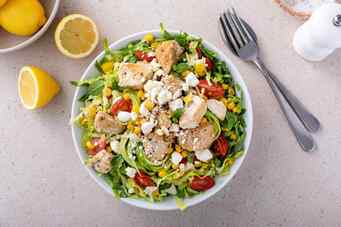 How you doin’? I really hate boring salads—you know the ones that have a little iceberg lettuce and a tomato slice with a bottled commercial dressing? We can do so much better than that.
The bestselling salad at my first restaurant was The Conglomeration. It was a large salad made with chopped iceberg, romaine, crisp bacon, chopped hard cooked egg, cucumber, shredded carrots, diced celery, chopped olives, red onion and chunks of soft white cheese. All of this was tossed with my secret Champagne vinaigrette—a masterpiece! The more “orts” (ingredients) the better. We even took care to serve it on a Hawaiian monkey pod, garlic rubbed salad plate. When we found out this was the bestselling salad, I put our kitchen staff’s talents to invent and test new mixed salads. I declared our restaurant would never serve ho-hum salads. Even our Angel’s Fruit & Yogurt Salad was loaded with flavors and textures. Our guests used to ask me, why can’t I make salads like this at home? You see, restaurant salads are delicious because of the variety and freshness of the ingredients. Most people don’t keep a wide variety of fresh veggies on hand for fear they will spoil before consuming. So please trust me, there's more to making salads than heaping on a pile of deep-fried croutons and boatloads of cheese. Here is what you can do from your very own kitchen to make the best salads ever:
Ingredients 4 ounces spring lettuce mix salad blend 4 tablespoons grilled chopped chicken breast 3 tablespoons grilled fresh corn 3 tablespoons low-sodium, canned black beans, drained 3 grape tomatoes, halved 2 tablespoons red or yellow bell peppers, diced 1-1/2 tablespoons Mexican cheese blend 1 tablespoon hulled pepitas, toasted 2 ounces Spicy Cilantro-Avocado Dressing, (see recipe below) 3 thin slices of fresh lemon, quartered ... and whatever you want to add Directions
ChefSecret: I sometimes use leftover chilled chicken meat or better yet warm fried chicken tenders in this salad. Zesty Avocado-Cilantro Dressing Prep time: 5 minutes Cook time: 15 minutes Total time: 20 minutes Yield: 16 ounces+ Ingredients 2 ounces toasted macadamia nuts 1 tablespoon fresh cilantro leaves 1 teaspoon fresh, peeled garlic 1/2 teaspoon fresh, seeded and ribbed diced red jalapeño pepper 3/4 cup fresh, peeled and pitted avocado 2 tablespoons fresh lime juice 5 ounces cold water 1/4 teaspoon kosher salt Directions
ChefSecrets: Freshly-roasting the macadamia nuts adds another level of flavor to the salad dressing. Quip of the Day: “Why is it called a Caesar Salad? ‘Cause Caesar ruled the romaines.” ------------------------------------------- Do you have a question or comment? Send your thoughts to ed@perspectives-la.com. All recipes and cooking tips are posted on our website https://www.perspectives-la.com/covid-19-survival-guide. ------------------------------------------- To you and everyone dear to you, be strong, positive, stay well, stay safe and be kind. Take a breath and count your blessings, and if you have a little extra to share with others, please consider donating to Feeding America, Tunnel to Towers, Union Rescue Mission and/or American Red Cross. #EntreeSalads #Salads #PerfectSalads #Lunch #Dinner #Vinaigrette #CilantroAvocado #Dressing #2024Recipes #URM #T2T #FeedingAmerica #RedCross #PerspectivesTheConsultingGroup ©PERSPECTIVES/The Consulting Group, LLC, 2024 |

For over 4 decades collaboration and vision have been the cornerstones of our approach to developing innovative solutions. We fuel innovation, uncover opportunities, discover trends and embrace sustainability, turning imaginative ideas into profitable realities. Categories
All
Archives
May 2024
|
 RSS Feed
www.perspectives-la.com
Copyright © 2021 Perspectives/The Consulting Group, LLC | Henderson, NV 89052 | 310-477-8877
Copyright © 2021 Perspectives/The Consulting Group, LLC | Henderson, NV 89052 | 310-477-8877